A living open-air museum
Bukhara
Over 2,000 years old — its entire historic center is UNESCO World Heritage-listed.
- Kalyan Minaret
- Lyab-i Hauz
- Ark Fortress
- Chor Minor
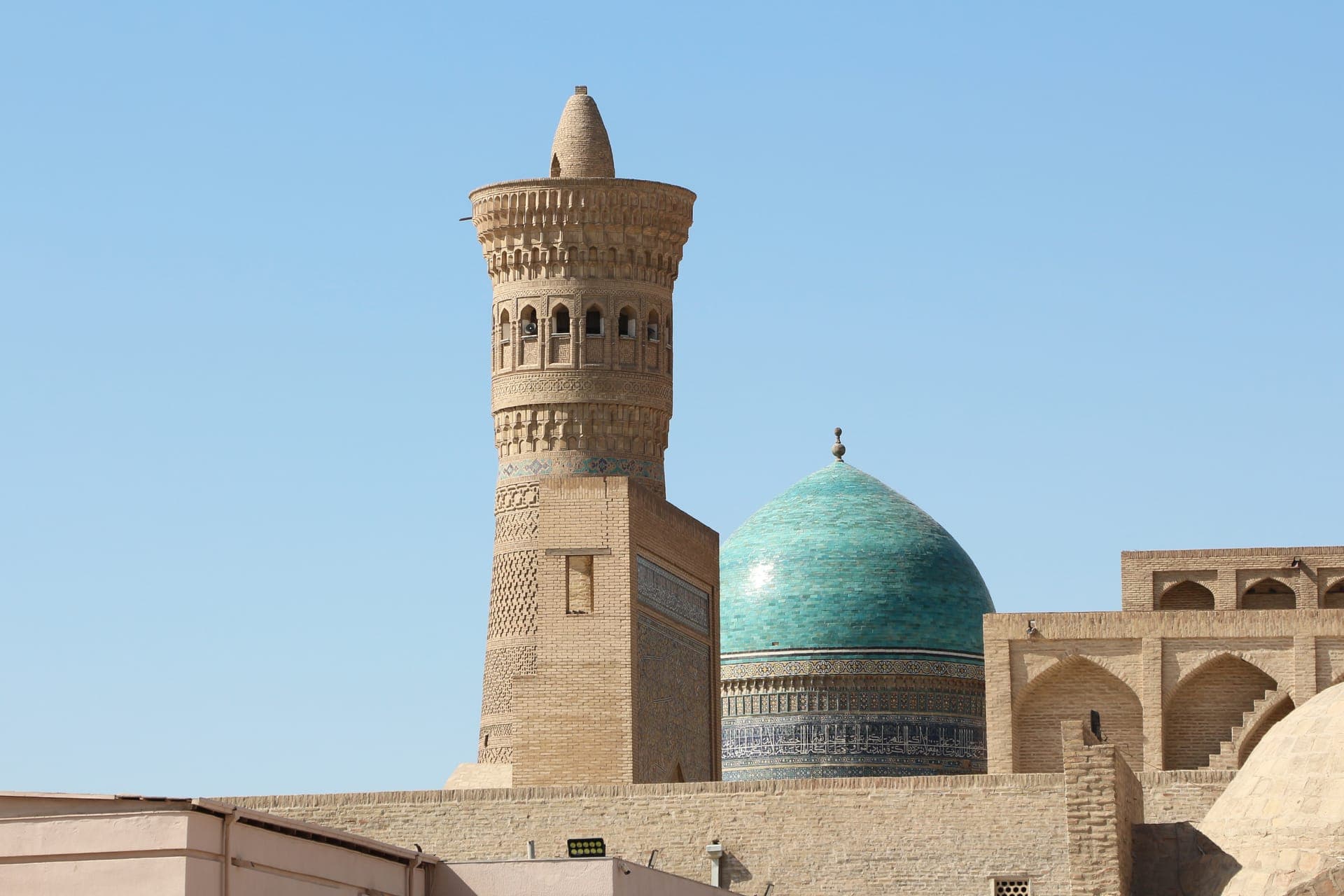
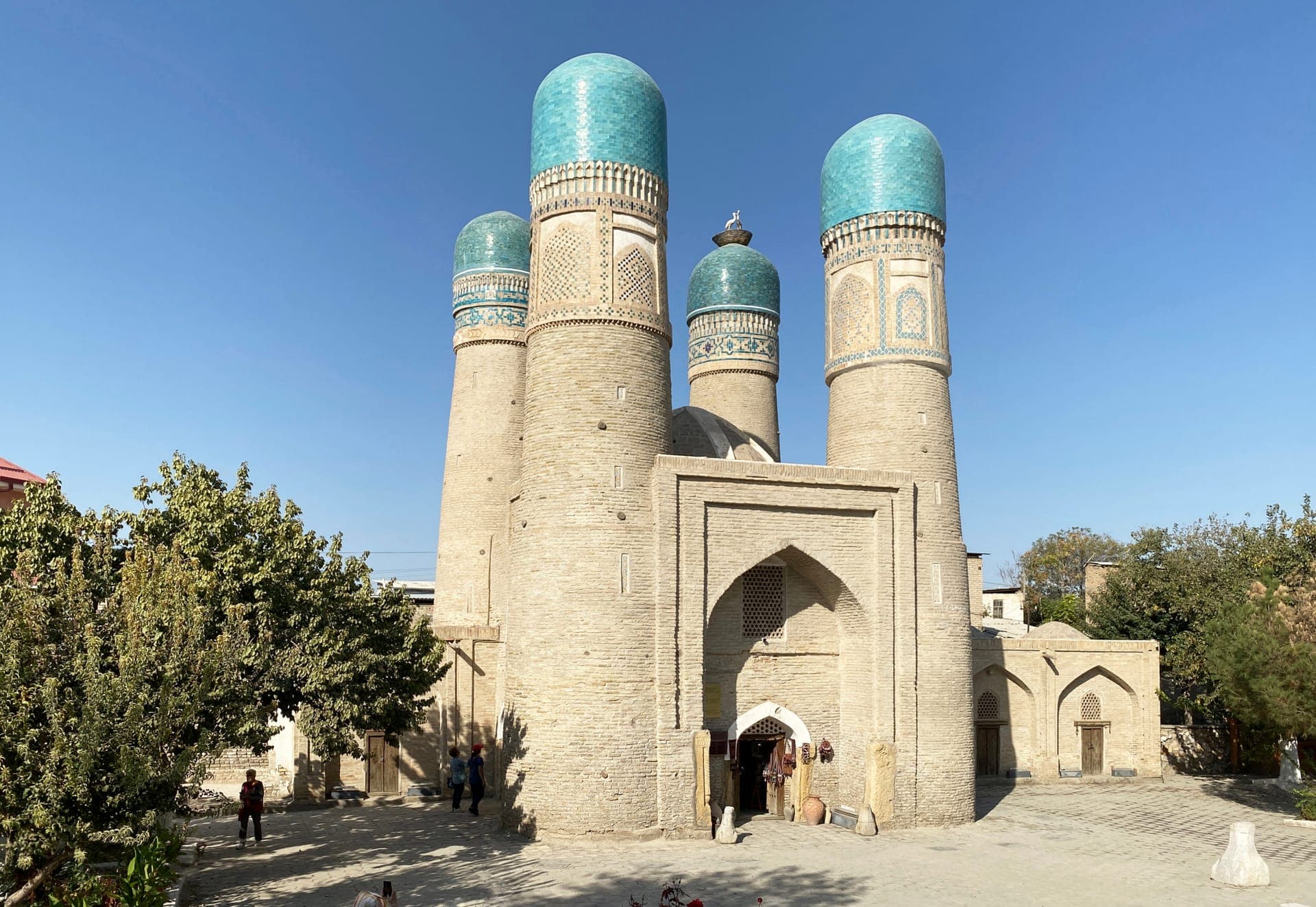
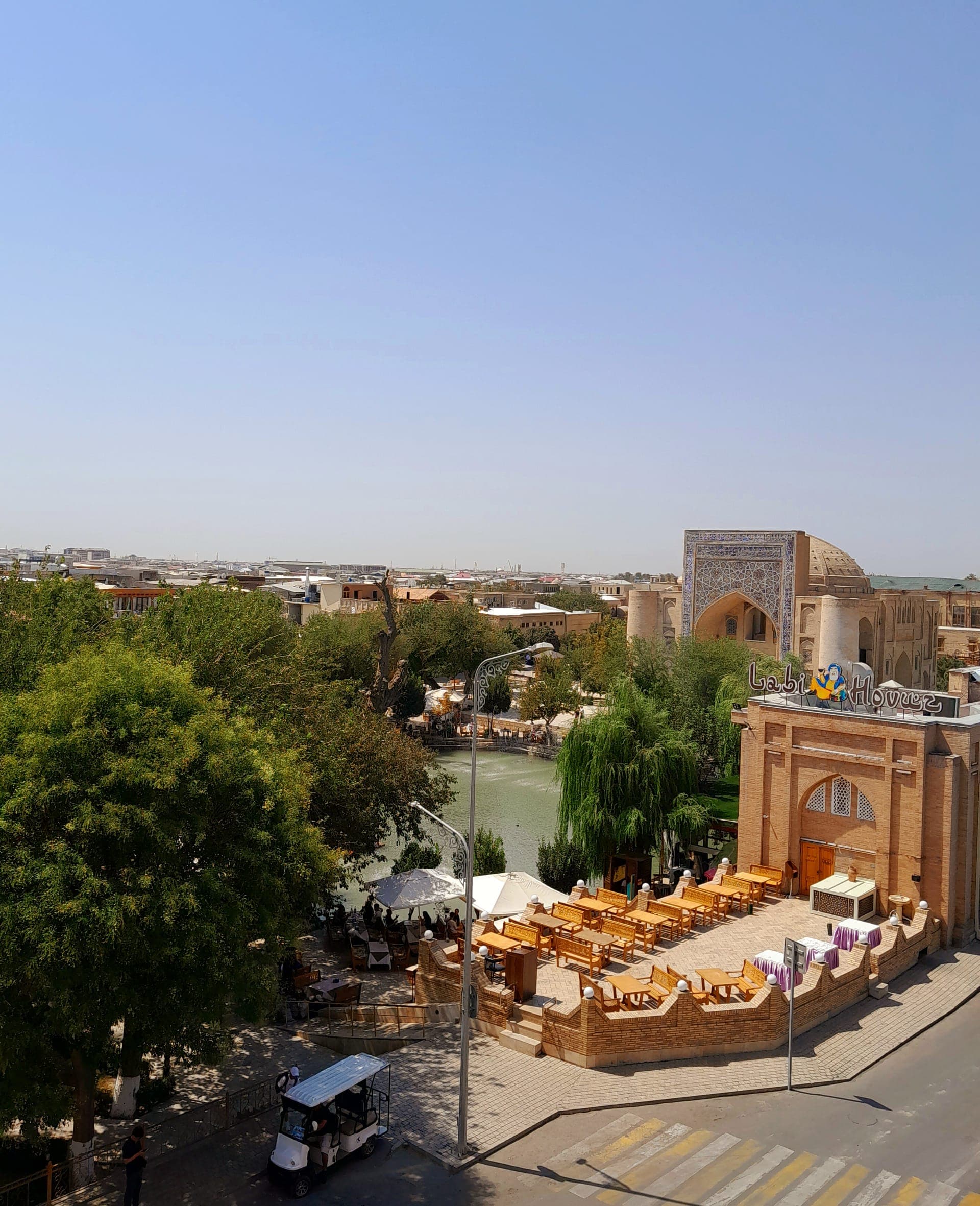
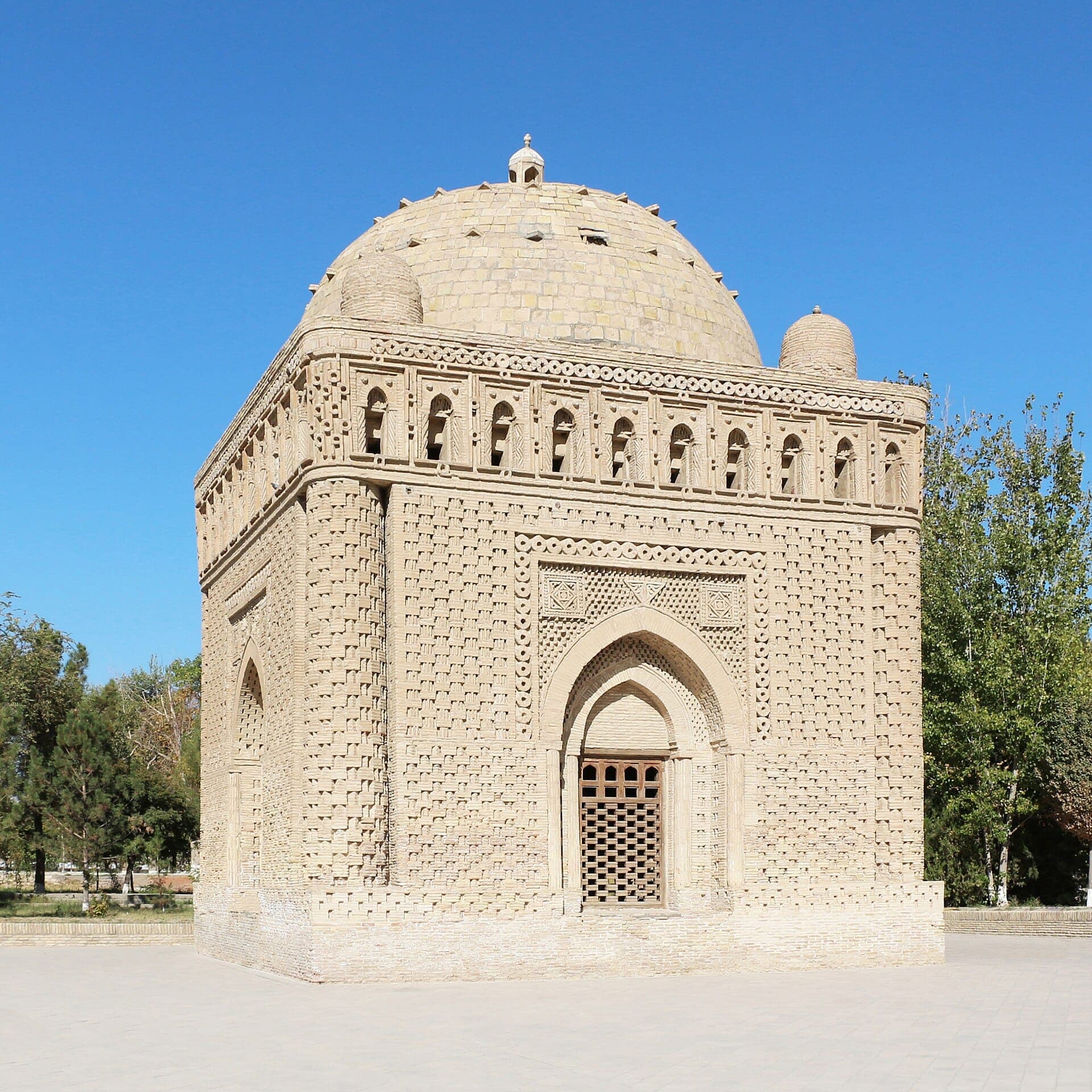
Kalyan Minaret — it reportedly stopped Genghis Khan from destroying the city
A city frozen in faith and trade
Bukhara was one of the great centers of Islamic scholarship and Silk Road trade for over a thousand years, and unlike many historic cities, its old town wasn't rebuilt or modernized away — it was simply lived in, continuously, for centuries. Walking through it today feels less like visiting a monument and more like stepping into a functioning 19th-century city that happens to still be standing.
The old town, on foot
Almost everything worth seeing in Bukhara sits within a compact, walkable core: the Ark fortress where the city's rulers lived for over a millennium, the covered trading domes still full of craftsmen and merchants, and Lyab-i Hauz, a tree-shaded pool plaza that's been the social center of the old town since the 1600s.
Kalyan Minaret
At 47 meters, the Kalyan Minaret was the tallest building in Central Asia for centuries — and, according to local legend, so impressive that Genghis Khan ordered it spared when the rest of the city was destroyed in 1220. It still anchors the skyline today, visible from almost anywhere in the old town.
Getting there from Tashkent
~3h 30m on the Afrosiyob high-speed train
Often paired with Samarkand on the same trip — many travelers go Tashkent → Samarkand → Bukhara by train, then fly or drive back.
Ready to visit Bukhara?
Tell us your dates and we'll handle the train tickets and transfer, start to finish.
Message Us on WhatsApp